
October 19, 2026
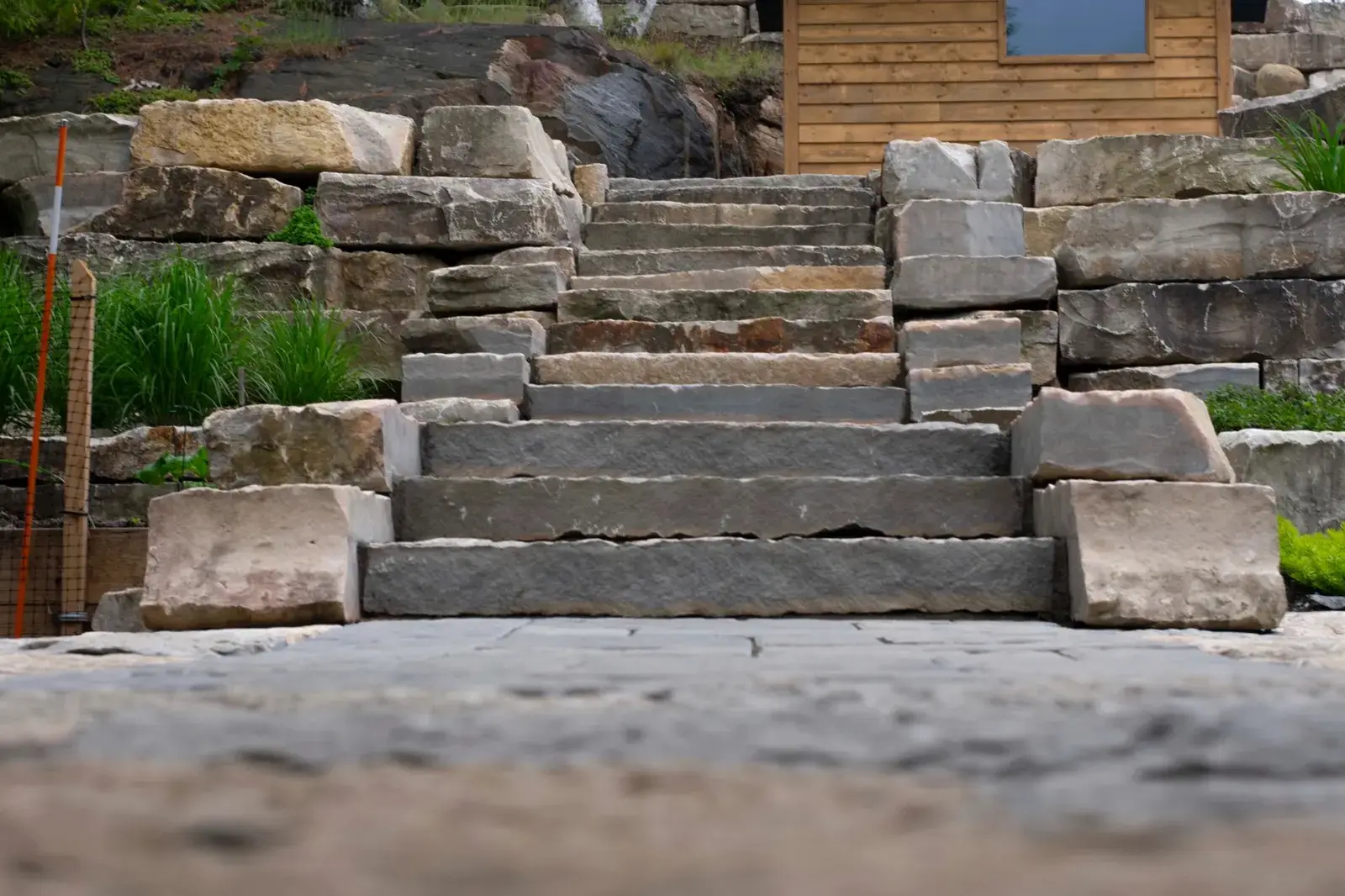
Custom steps are cut from thick beds of natural stone to the dimensions of your site, not pulled from a fixed catalogue size. That makes the measurements the most important part of the job. The total rise from the lower grade to the upper landing, the available run, and the width of the opening all decide how many treads you need and how deep each one can be. A comfortable step is consistent: when the rise changes from one tread to the next, people trip, whatever the stone looks like.
Measure the finished grades, not the ground as it sits today. If a patio, walkway or landing is still to be built at either end, the steps have to be sized to the surface that will exist, including any base material and the thickness of the paving. Entry steps, garden steps and step-downs through a retaining wall all follow the same rule, though each carries a different load and a different tolerance for a slightly uneven tread.
Then plan the footing. Stone steps are heavy and stay put only if the base under them does not move. That means excavating below the frost-affected soil where the site calls for it, compacting a granular base, and keeping water draining away rather than pooling under the lowest tread. Send us your rough measurements or a sketch and we will help you work out the tread sizes before anything is cut.