
November 2, 2026
A Great Lakes shoreline is not a single load case. Waves hit it in storm season, lake levels rise and fall from year to year, and in winter shore ice pushes against whatever sits at the water’s edge. A shoreline structure has to cope with all three, and the stone that does it best is dense, angular and heavy enough that the water cannot move it.
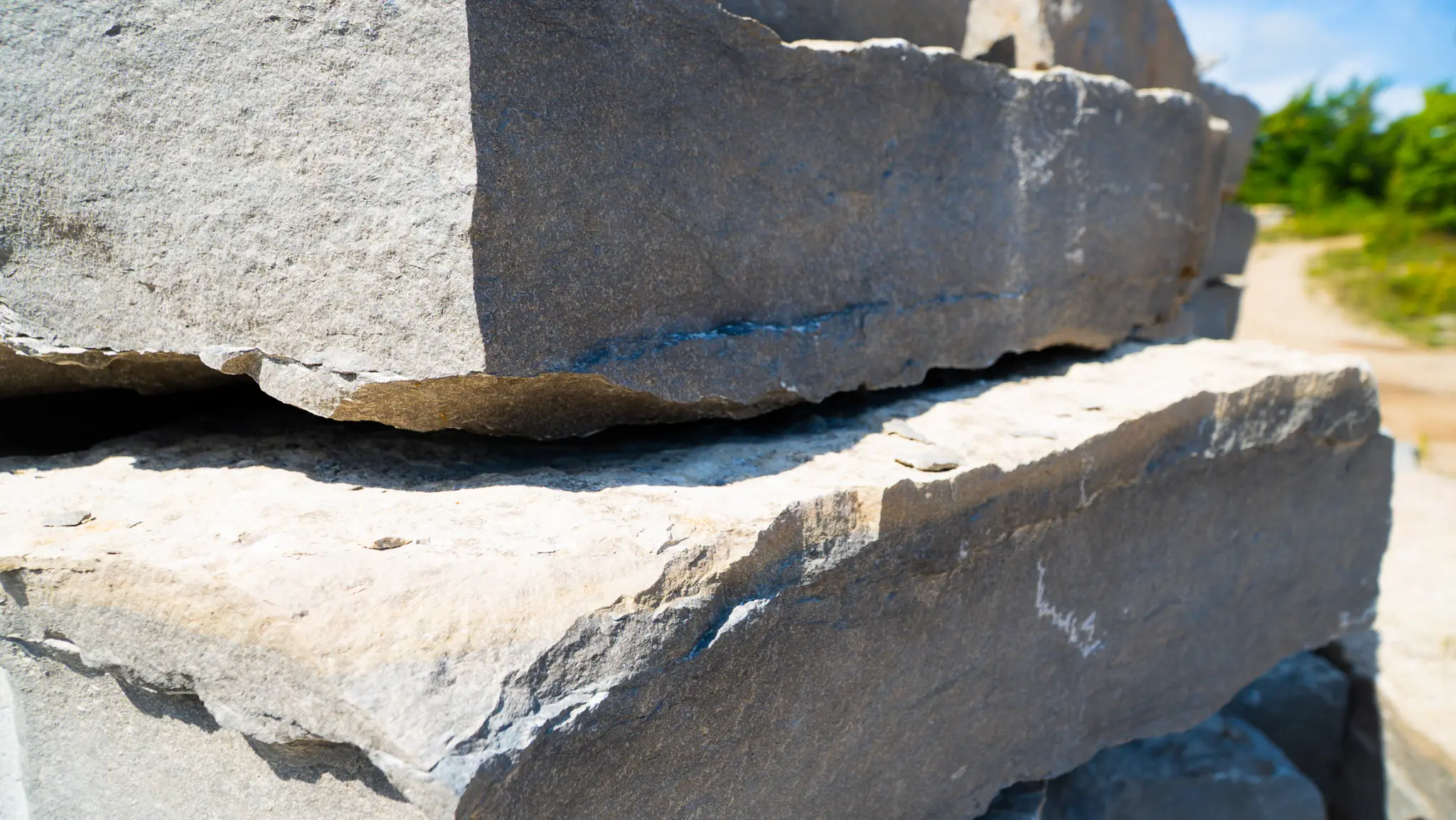
Size matters because wave energy is what dislodges stone. Larger pieces resist it, and pieces with flat, irregular faces lock against each other better than rounded ones. Limestone and dolostone from the Niagara Escarpment are dense carbonate rock, which is why they have long been used for this kind of work along the lakes and on Manitoulin Island. The right size depends on how exposed the property is, and that is a question for the site, not for a catalogue.
Placement carries as much weight as the stone itself. Armour stone generally sits on a prepared base, often with filter fabric or graded stone beneath it, so waves cannot pull fines out from behind the face. Work at the water’s edge can also need approval from the local conservation authority or other agencies, so check before you order. For anything beyond a modest wall, bring in a qualified engineer. Send us the length of shoreline and a few photos, and we will talk through what to expect.