
November 16, 2026
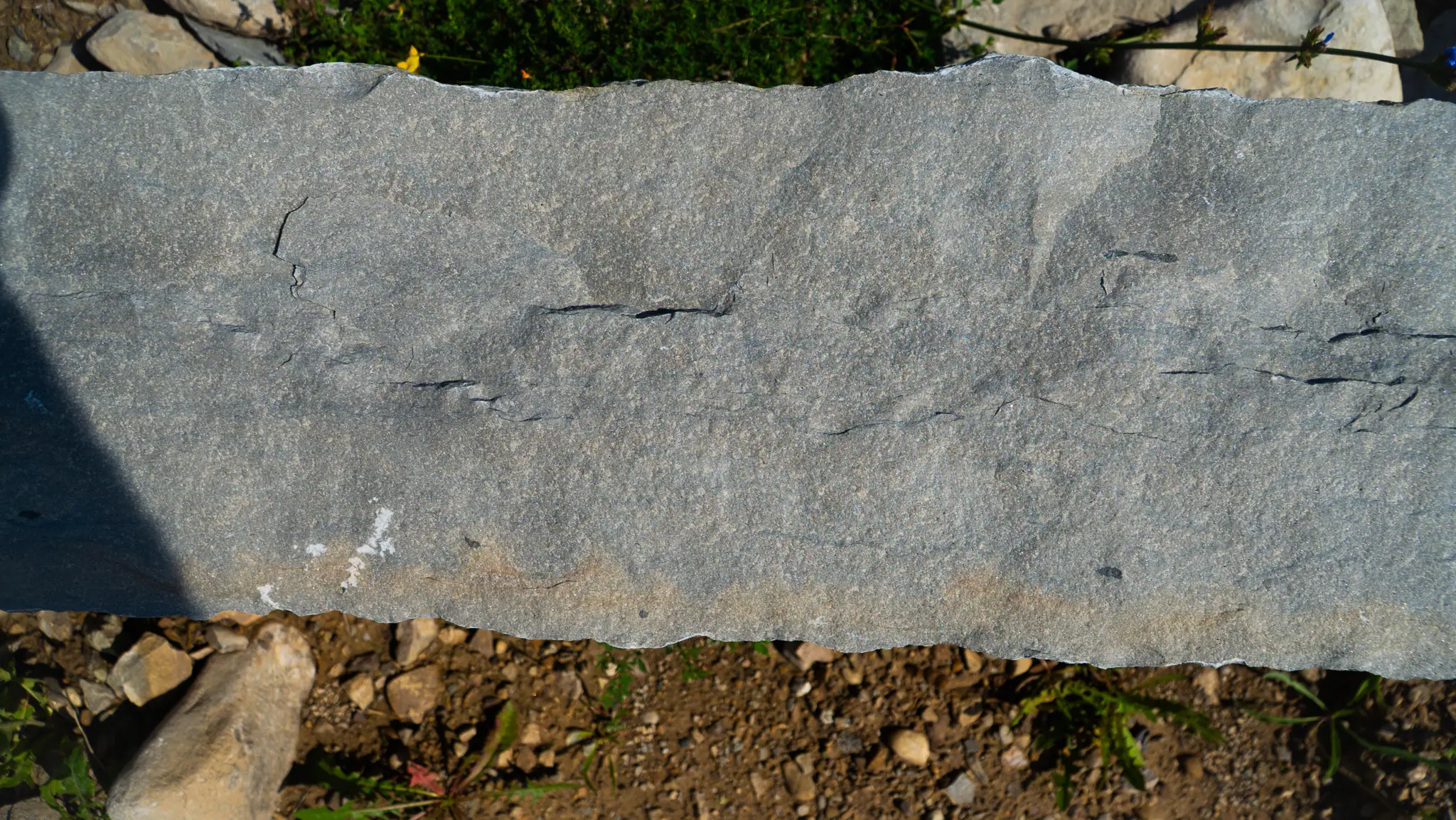
Dense carbonate rock is not what fails in a Northern Ontario winter. Limestone has very little open pore space, so it takes on little water and has little to freeze. What moves is the ground underneath. Water in soil turns to ice and expands, lifts whatever sits above it, and then lets go in the thaw, usually unevenly. A slab or a step does not crack so much as follow the ground up and down.
That makes the base the real structure of a stone project. A base of compacted, free-draining granular material gives water somewhere to go instead of sitting under the stone and freezing in place. Soft clay, topsoil or organic material left under a base will hold water and settle differently from the ground beside it. Taking the excavation down to firm subgrade, and building back up in compacted lifts, costs time at the start and saves it every spring after.
Drainage is the second half of the same question. Stone should shed water away from itself and from any wall or foundation next to it, not toward them. Check where a patio or a set of steps will send runoff before the base goes in, and where meltwater will collect in March. If you are unsure what a site needs, send us a description and photos and we will talk it through before anything is ordered.