
September 28, 2026
Garden edging is the smallest decision on a landscaping plan and one of the easiest to get wrong. Unlike plastic or aluminum edging, natural stone doesn’t need pinning every few feet or replacing after a few winters — it holds its line because of its own weight and shape. The tradeoff is that the stone has to be selected for the job, not just picked up at random, since a piece sized for a mulch bed won’t behave the same way along a driveway or a path that takes foot traffic.
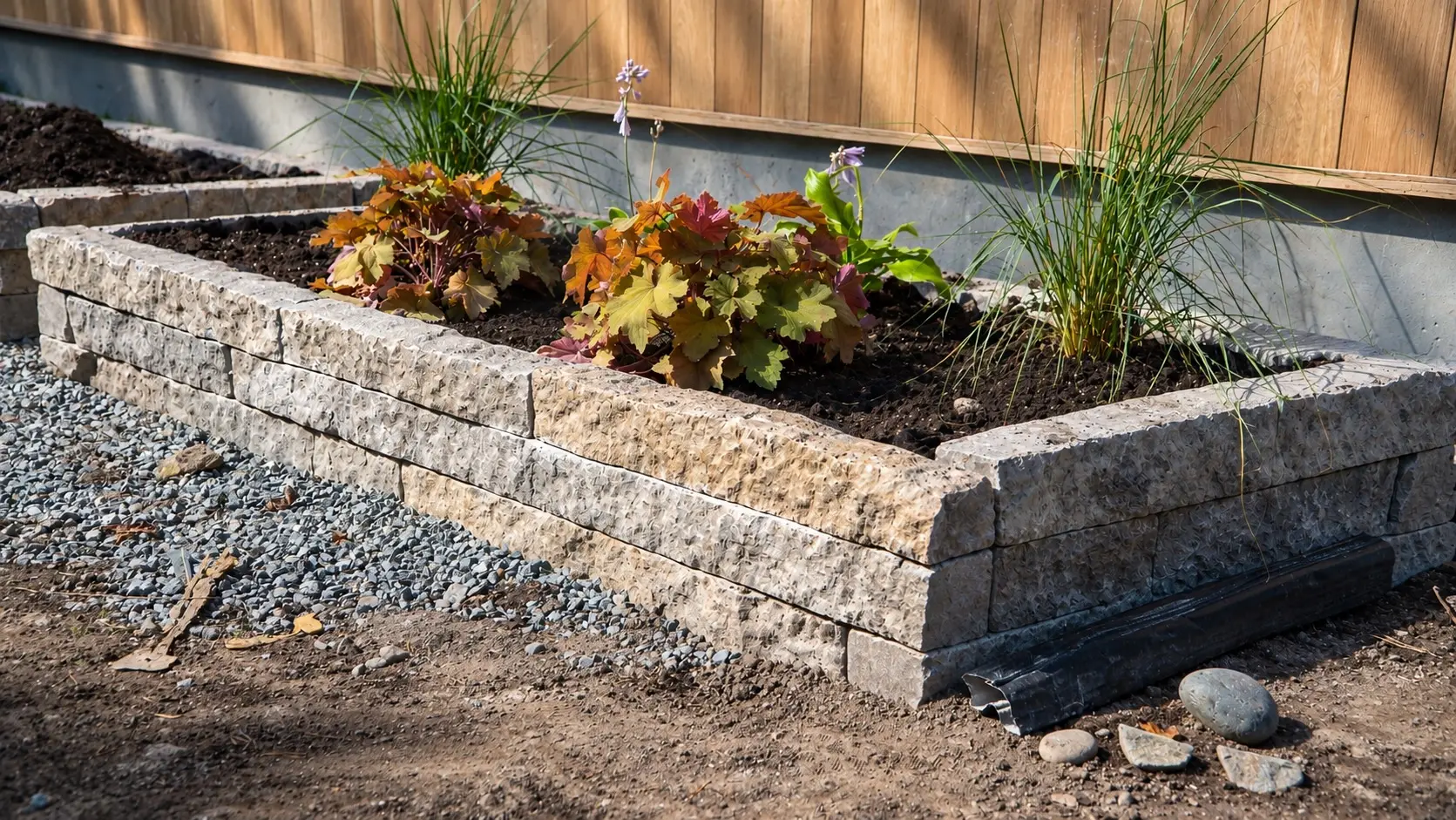
The first choice is the line itself. A formal bed against a lawn edge usually wants pieces with a consistent height and a straighter face, so the border reads as one continuous edge rather than a row of individual rocks. A curved or informal border — around a planting bed, along a natural slope — works better with irregular, naturally split pieces that can follow a bend without looking cut to fit. Driveway and property edging carries more weight than either, so it calls for larger stone that won’t shift under a tire or a snowplow blade.
Setting it right matters as much as choosing it. Edging that sits flush on top of the soil moves with the first hard frost; the piece needs enough of its base buried in compacted material to stay put through a freeze-thaw cycle. We size and select edging stone with that in mind before it ever leaves the yard, which is easier to do when it’s quarried and cut on our own site rather than sourced from whatever’s left on someone else’s pile.