
October 26, 2026
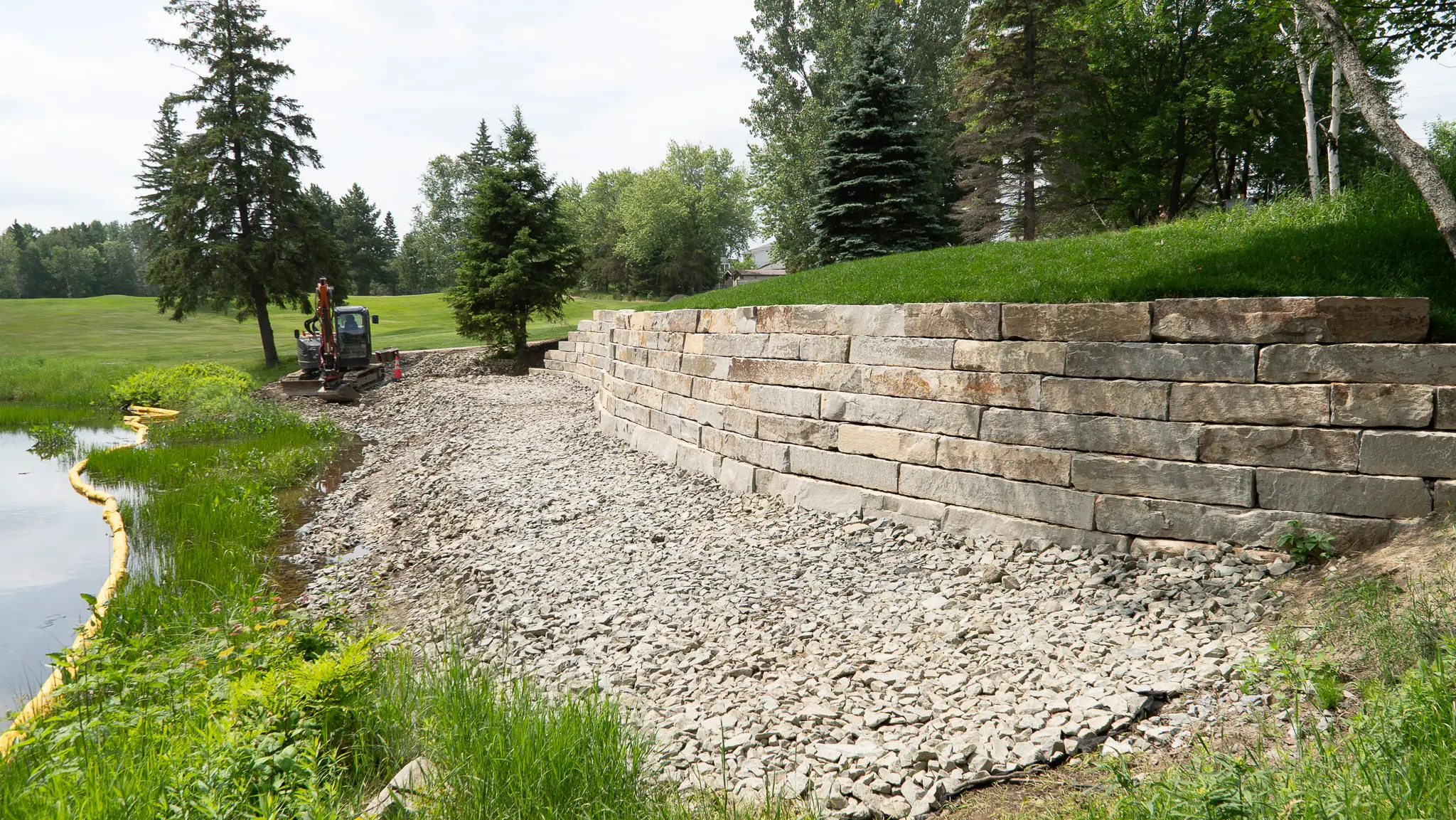
A dry-stacked wall holds together by weight, fit and friction alone. There is no mortar between the courses, so the wall can shift slightly with the ground and settle back, and water passes through the joints instead of building up behind the face. In a climate that freezes as deeply as Northern Ontario, that tolerance for movement is the main reason dry-stack is so widely used for retaining walls, garden walls and terraces.
A mortared wall is rigid. It can be built with a cleaner, tighter face and it resists being disturbed, but it does not forgive movement. If the footing heaves or water gets trapped behind the wall, the mortar joints crack and the damage spreads through the courses. A mortared wall needs a footing that sits below frost depth, a solid base and a deliberate drainage path behind it, because the wall itself will not let water through.
Neither method fixes poor stone selection. Large, squared pieces with level beds and good contact between courses stack well. Rounded or thin pieces do not. Whichever approach you choose, the base, the drainage and the height matter more than the style, and taller walls and walls carrying a load should be designed by someone qualified. Send us your plan or a rough sketch and we will help you think through which stone suits the wall you have in mind.